The Request That Takes Three Emails and a Week
Someone needs training. Maybe it’s a new client requiring onboarding, maybe it’s an internal team needing a refresher, or maybe it’s a partner organization that needs certification support. In most companies, that need turns into an email to L&D, a follow-up asking for details, a search for trainer availability, and, a week later, a confirmed session, if nobody dropped the thread.
That process, repeated across an enterprise, is where a huge share of L&D’s actual time goes. Not designing training. Processing requests.
Four Kinds of Requests, One System
AscentPath.AI‘s training request management supports four distinct request types: internal, partner, client, and public, so requests coming from inside the organization, from a training partner, from a client, or from the open public all flow through the same structured system instead of four different informal processes.
The Chatbot That Actually Does the Work
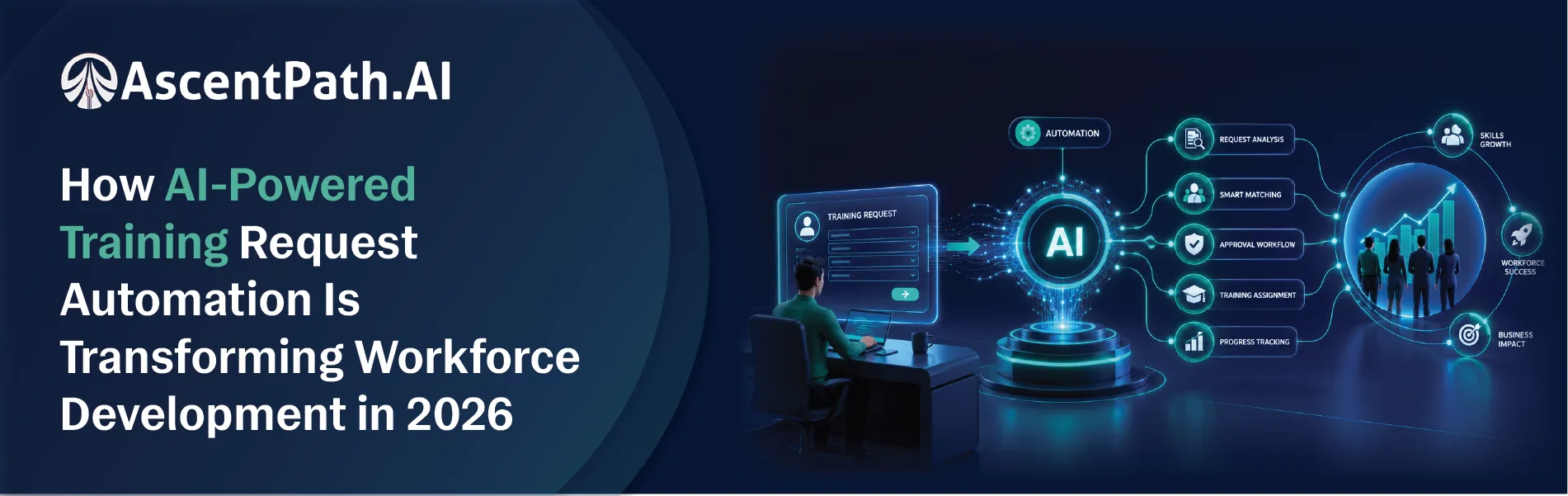
This is where VoXgent, AscentPath.AI‘s conversational AI assistant changes the shape of the process. Training requests can be created manually or directly through VoXgent, meaning a learner, client contact, or partner can simply describe what they need in conversation, and the request gets structured, routed, and scheduled without a human coordinator manually processing every step. VoXgent also handles direct learner inquiries and instant booking updates, so status questions get answered immediately instead of sitting in a queue.
Why This Matters More Than It Sounds
A mandatory request includes course title, description, course type and level, training dates, region, and learner count, the details that used to require a back-and-forth email chain to collect. When VoXgent or a structured intake form captures these upfront, the request arrives ready to schedule instead of ready to clarify.
Once a request is logged, trainer assignment draws on real availability data, automatic conflict detection, and language and time zone matching, again with the option of human trainers or AI training assistants, so the gap between “we need this training” and “this training is scheduled” shrinks from days to a fraction of that.
What This Looks Like in the Numbers
Organizations running training requests through AscentPath.AI reports a 40% reduction in manual administration and 70% faster course creation because a structured request that’s already matched to a reusable course component in the Content Library doesn’t need to be built from scratch every time.
Built for Every Kind of Requester
Employees requesting internal training, training partners managing vendor-delivered programs, clients requesting bespoke sessions, and public learners booking open courses all get the same responsive process because the platform’s role structure (supporting organization, client, and partner hierarchies, with their own admins, coordinators, and trainers) was built to handle exactly this range of requesters from day one.
One Last Thing
The old version of this story ends with a coordinator apologizing for a scheduling delay. The new version ends with a request submitted through VoXgent on a Tuesday afternoon, a trainer matched and confirmed within minutes, and a calendar invite already in the requester’s inbox.
That’s what AI-powered training request automation makes possible.